
“This post contains affiliate links. As an Amazon Associate, I earn from qualified purchases at no extra cost to you.” Full Disclosure
Finding the best moisturizer for oily skin in summer feels like a contradiction; your face is already shining by mid-morning, and applying more product seems like the last thing it needs. But skipping moisturizer is exactly what makes oily skin worse. The fix is not less hydration. It is a completely different type of moisturizer.
If you have spent months switching between brands in the same heavy-cream format and nothing has changed, the product type is the problem. The day you move to a water-gel formula, the difference shows up within a week. Midday shine drops. Foundation lasts. Sunscreen stops pilling. This guide explains the science behind why that happens, which ingredients actually regulate oily skin, and which gel moisturizers are genuinely worth using.
Why Oily Skin Still Needs a Lightweight Moisturizer for Summer
Oiliness and dehydration are not the same problem, and confusing the two keeps most oily-skin routines permanently broken.
Oiliness comes from sebaceous glands inside your pores, which produce sebum to protect the skin barrier. Hydration is about water content inside the skin cells – a completely separate system. Your skin can be producing excess oil and be water-depleted at exactly the same time.
When your skin cells run low on water, the sebaceous glands treat it as a barrier emergency and increase sebum output to compensate. This is called reactive sebum production. So when you skip moisturizer because your face already feels oily, you remove the hydration your skin is asking for, and the glands respond by producing more oil. That is the cycle, and it only breaks when you give your skin the right kind of hydration.
Gel-based skincare addressed this years before mainstream formulas caught up. The method is straightforward: use lightweight, water-binding ingredients to hydrate skin cells without sealing the surface under heavy occlusives. For oily skin in heat and humidity, this is not just a better approach; it is the only one that makes physiological sense.
Why Your Current Moisturizer Makes Oily Skin Worse in Summer
Heavy creams work by sitting on the skin surface and forming a physical seal that slows moisture evaporation. In cold, dry conditions where the air constantly pulls moisture out of skin, that is a sound mechanism.
In persistent heat and humidity, your skin is not losing moisture to the air. So a thick cream has no useful function. It sits on the surface, mixes with the sebum coming out of your pores, and creates the greasy film you feel within the hour. Add sweat, pollution, and dust to that layer and by afternoon your entire morning routine has disappeared.
This is not your skin type being unmanageable. It is a product format problem, and it has a straightforward solution.
The ingredients in your current moisturizer to check right now
Turn your moisturizer over. Find the INCI ingredient list, not the marketing copy on the front. Ingredients are listed by concentration, so the first five or six are what the product is mostly made of.
On oily skin, these are the ones to avoid:
- Cocos Nucifera Oil (coconut oil) – comedogenic rating 4 out of 5. It reliably clogs pores regardless of how it was processed. Natural does not mean non-comedogenic.
- Theobroma Cacao Seed Butter (cocoa butter) – also rated 4 out of 5. Extremely occlusive. Common in body butters that transfer onto the face.
- Isopropyl myristate/isopropyl palmitate – synthetic emollients rated 3 to 5 on the comedogenic scale. They give a deceptively light feel while blocking pores. A moisturizer labelled oil-free can still carry these near the top of its ingredient list. Oil-free means no plant or mineral oils – nothing more.
- Lanolin – animal-derived wax, comedogenic rating 4 to 5.
- Olive oil, sweet almond oil, peach kernel oil – all high in oleic acid, which research consistently links to increased comedone formation on oily skin.
If three or four of these appear in the top half of your current moisturiser’s ingredient list, that is your answer for why your skin stays oily after moisturizing.
The Right Ingredients in a Non-Comedogenic Moisturizer for Oily Summer Skin
The best moisturizer for oily skin in summer is built on humectants – ingredients that pull water into skin cells without adding surface weight or blocking pores.
Glycerin
Draws moisture from the air directly into the skin cells. Non-comedogenic, thoroughly researched, and consistently effective. It should appear near the top of any oily-skin moisturiser you consider.
Hyaluronic Acid and Sodium Hyaluronate
Weightless on skin and powerful when formulated correctly. A multi-molecular-weight system, where molecules of different sizes are combined, allows hyaluronic acid to hydrate at different skin depths simultaneously rather than just pooling at the surface. This is one reason a well-formulated gel moisturizer performs noticeably better than a basic lotion carrying the same ingredient name on the label.
Niacinamide at 2 to 5 Percent
Reduces sebum production at the gland level, not just temporarily at the surface. Peer-reviewed studies confirm a measurable drop in sebum excretion rate after four to eight weeks of consistent daily use. It also fades post-breakout pigmentation steadily over time – those flat dark marks that linger for months after a spot has cleared, especially on deeper skin tones.
Centella Asiatica
Anti-inflammatory and barrier-strengthening, with particular benefit for oily skin that is also reactive or sensitised. One of the most thoroughly studied botanical extracts in skincare.
Zinc PCA
Regulates sebum at the gland level and leaves a light matte effect on the skin surface without causing dryness.
Panthenol
Supports barrier repair and improves moisture retention without contributing to surface oiliness. A reliable supporting ingredient in any oily-skin formula.
Why a Water Gel Moisturizer Works Differently on Oily Skin
Water-gel and gel-cream formulas are structurally different from conventional creams. Instead of relying on occlusive emollients to hold moisture in, they use water-binding polymers and humectant combinations that hydrate without adding surface weight.
They absorb in under sixty seconds. They sit cleanly under sunscreen without pilling. Because there is nothing occlusive in the formula competing with your skin’s natural sebum output, they do not amplify oiliness.
Switching between cream brands for years and expecting a different result is a pattern most people with oily skin know well. Changing the format entirely to a gel is what actually resolves it. The texture change is immediate. The skin behaviour change follows within days.
Best Moisturiser for Oily Skin in Summer – 8 Gel Formulas That Deliver
Each of these has been chosen based on ingredient integrity, strong and consistent reviews across oily and combination skin types, and genuine availability. No paid placements, no gifted products.
COSRX Oil-Free Ultra Moisturising Lotion
The most minimal formula here. Built on 70 percent birch sap water rich in vitamins, minerals, and natural salicylates that calm congested pores with zero added oils. It absorbs cleanly, layers under sunscreen without pilling, and has a single purpose to hydrate without adding anything unnecessary. Consistently rated at the top by oily and acne-prone skin communities. Available through major online beauty retailers.
View on Amazon (paid link)
Laneige Water Bank Blue Hyaluronic Gel Moisturiser
Laneige’s blue hyaluronic acid is micro-sized to absorb faster and reach deeper skin layers than standard hyaluronic acid. The gel contains micro-cream beads that melt on contact, releasing mint leaf extract alongside hydration. Clinically tested for 48-hour moisture results, dermatologist-tested, hypoallergenic, and non-comedogenic. A consistently recommended option for oily skin in warm, humid weather.
View on Amazon (paid link)
Innisfree Green Tea Seed Hyaluronic Acid Cream
Green tea extract provides antioxidant defence against UV and urban pollution. Hyaluronic acid handles deep hydration while the gel-cream texture stays light enough to leave no surface residue. Sits slightly richer than a straight water-gel, making it the right choice for combination skin that needs a little more than a basic gel can offer.
View on Amazon (paid link)
Torriden Dive-In Low Molecular Hyaluronic Acid Soothing Cream
Five types of hyaluronic acid at different molecular weights deliver hydration from the surface down to deeper skin layers simultaneously. Despite the layered system, the texture is a proper lightweight water-gel; it disappears within seconds of application. Trehalose and panthenol reinforce the barrier. No stickiness, no residue. Earned a strong following among oily-skin users who have worked through a lot of products.
View on Amazon (paid link)
SKIN1004 Madagascar Centella Hyalu-Cica Gel Cream
Centella asiatica is the hero ingredient here – calming redness, reducing inflammation, and settling skin that reacts easily. Paired with hyaluronic acid in a water-fit gel texture that absorbs without tackiness. The right starting point for oily skin that is also sensitive, or that tends to flare when switching products. Has a loyal following among those who found most other moisturizers too irritating to use consistently.
View on Amazon (paid link)
Klairs Fundamental Water Gel Cream
Designed specifically for oily and combination skin, not adapted for it as an afterthought. Applies as an immediate burst of moisture, then sets to a non-sticky finish. Squalane is present at a skin-identical level – enough to support the barrier without triggering excess sebum. Completely fragrance-free. One of the gentlest options on this list for reactive skin.
View on Amazon (paid link)
Belif Aqua Bomb Lightweight Moisturiser
Niacinamide, hyaluronic acid, and squalane in a bouncy gel-cream format with up to 72 hours of hydration in clinical testing. Non-comedogenic, stable through humidity, and long wear, sits flat under SPF. Has maintained a loyal following among oily-skin users, not because of marketing but because it holds up through the kind of day that makes an average moisturizer visible on the face by noon.
View on Amazon (paid link)
Round Lab Birch Juice Moisturizing Cream
70 percent birch juice, no oils. The birch sap delivers genuine hydration in a texture that registers as almost nothing on the skin – absorbs without a trace, layers cleanly under sunscreen, and transitions between warm and cooler months without needing a product swap. One of the few moisturizers oily skin can rely on year-round without adjustment.
View on Amazon (paid link)
Which Lightweight Moisturizer for Oily Skin Suits Your Skin Type
Very oily skin, midday shine is the main concern: COSRX Oil-Free Lotion or Round Lab Birch Juice Cream. The two lightest textures on this list, with the shortest ingredient lists.
Oily skin that is also reactive or flares with new products: SKIN1004 Hyalu-Cica Gel Cream or Klairs Fundamental Water Gel. Centella calms reactivity while the water-gel format manages surface oil.
Combination skin – oily T-zone, drier cheeks: Torriden Dive-In Cream or Laneige Water Bank Gel. Multi-depth hyaluronic acid addresses different hydration levels across zones.
Long days, urban environment, clinically tested formula: Laneige Water Bank or Belif Aqua Bomb. Both are dermatologist-tested, non-comedogenic, and formulated to hold through humidity and extended wear.
How to Apply Your Gel Moisturizer for Oily Skin Correctly
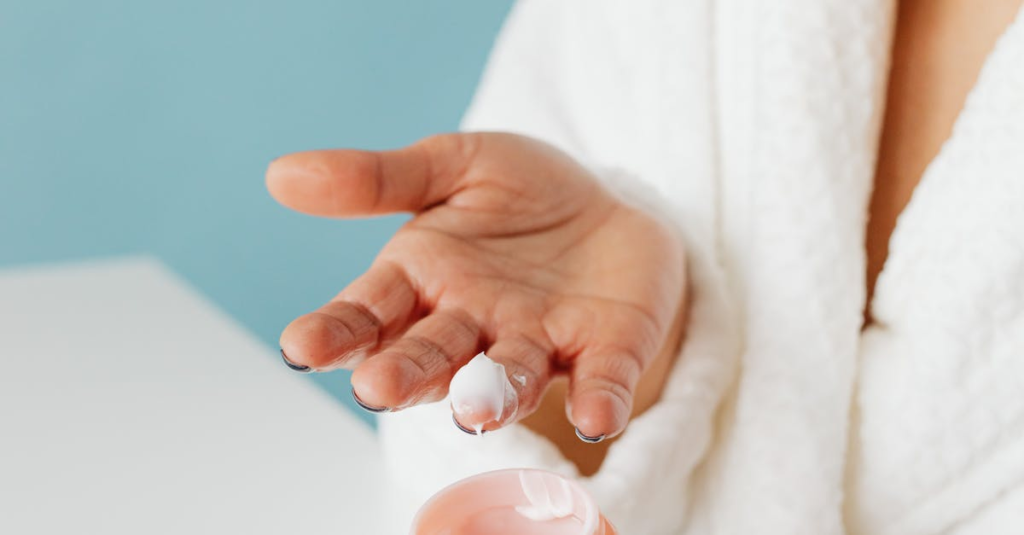
Use less than feels like enough. A pea-sized amount covers the full face. If your skin feels tacky two minutes after applying, that is not absorption – it is too much product sitting on the surface. That tackiness becomes visible in the shine before noon.
Apply on damp skin, immediately after cleansing, while the face is still slightly wet. Glycerin and hyaluronic acid need surface moisture to work – they draw that existing moisture into skin cells. On fully dry skin, both perform noticeably below their potential.
Routine order – cleanser, then serum if you use one, then moisturizer, then sunscreen. Moisturizer always goes before SPF –sunscreen needs a smooth, hydrated surface to spread and sit correctly on skin.
In cooler months or at higher altitudes, move to a gel-cream version within the same product range rather than switching brands entirely. Laneige, Torriden, and Innisfree each carry both gel and gel-cream textures within their lines.
What Changes After You Switch to the Right Moisturizer for Oily Skin
The greasy feeling right after applying disappears from day one. That is a texture problem, and the right format solves it immediately.
Within the first week, midday shine reduces as your skin stops overcompensating. Reactive sebum overactivity built up from weeks of using the wrong product format takes two to three weeks to fully settle.
By week three, the T-zone stays calmer through the afternoon, pores appear smaller because they are not congested, and sunscreen no longer slips. Niacinamide begins fading post-breakout marks at around six to eight weeks of consistent daily use. That result builds over time; the longer it stays in the routine, the more visibly even the skin tone becomes.
Questions people actually ask
Does skipping moisturizer reduce oiliness in summer?
No. It signals the sebaceous glands to produce more oil. The solution is switching to a lighter, non-comedogenic formula – not removing the step from your routine.
Is coconut oil safe on oily skin if it is cold-pressed or organic?
No. The processing method does not change the comedogenic rating of 4 out of 5. Always read the INCI list, not the label on the front of the packaging.
Does niacinamide actually reduce oil production?
Yes. At 2 to 5 percent concentration, niacinamide has been studied specifically for its effect on sebum production with consistent results across multiple studies. It reduces sebum excretion rate at the gland level after four to eight weeks of daily use. That’s a clinical finding, not marketing copy.
My moisturizer says oil-free, but my skin is still shiny. Why?
Oil-free means no added plant or mineral oils. It says nothing about pore-blocking synthetic emollients like isopropyl myristate. A product can have zero oils and still block pores thoroughly. Read the INCI list from the top, not the label on the front.
Is coconut oil safe for oily skin?
Coconut oil has a comedogenic rating of 4 out of 5. For oily and acne-prone skin that’s one of the highest risk ratings. Its popularity in clean beauty is about sourcing, not pore behaviour. Natural and suitable for your skin type are two different things, and this is one of the clearest examples of that gap.
The best moisturizer for oily skin in summer is not a heavier formula with better marketing. It is a fundamentally different format – one that gives your skin the water it is asking for without the weight that makes things worse. Switch to a water-gel, give it three weeks, and your skin will tell you the rest.